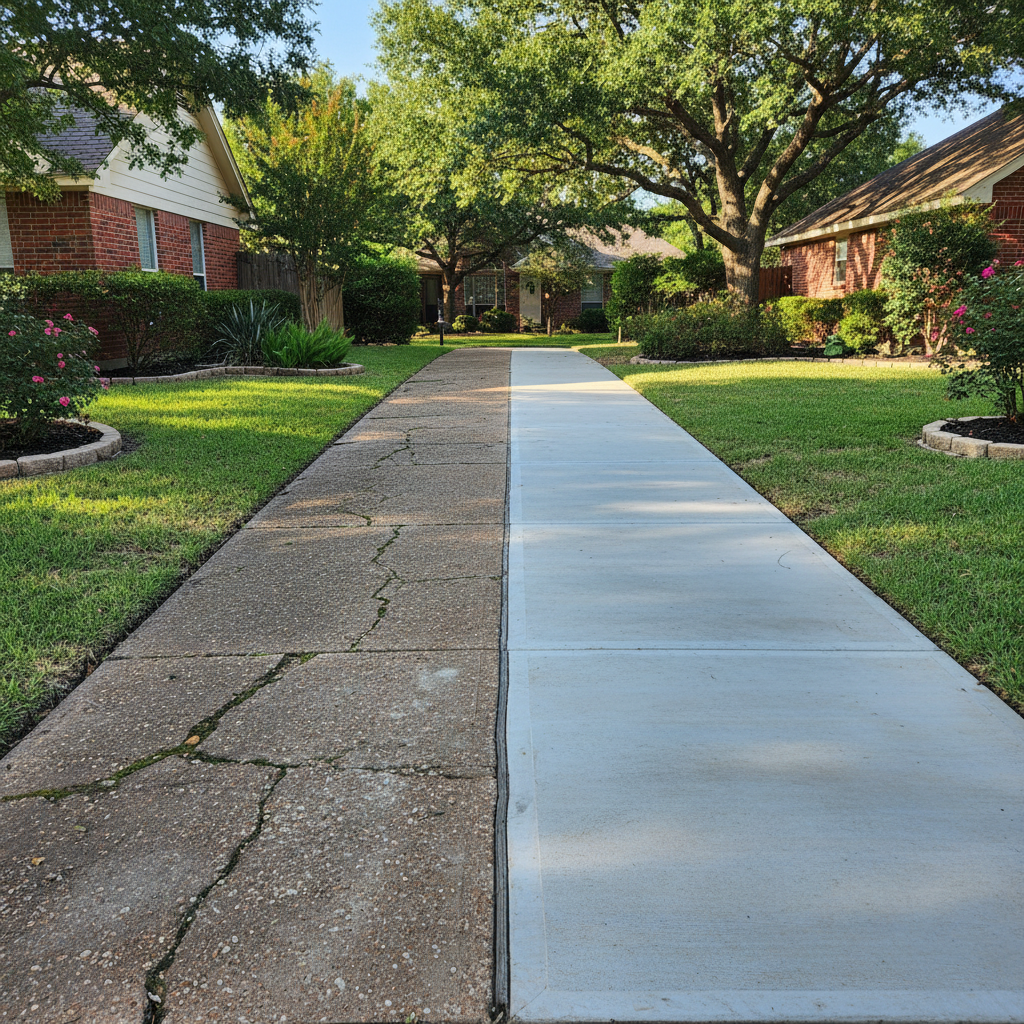
Alright, let's talk sidewalks. You're looking to put in a new one or replace an old, cracked mess, and you've probably seen a couple of options out there: the classic poured concrete slab or those interlocking concrete pavers. Both get the job done, but they're definitely not the same. As a contractor who's laid a lot of both right here in Carrollton, I can tell you there are some big differences you need to think about before you make a decision.
Poured Concrete Sidewalks: The Traditional Workhorse
This is what most people picture when you say 'concrete sidewalk.' It's a continuous slab, usually 4-6 inches thick, poured on-site. It's been the go-to for a reason.
- Cost: Generally, poured concrete is your more budget-friendly option upfront. Less labor involved in placement compared to individual pavers, and the material cost is usually lower per square foot. If you're watching your pennies, this often wins out.
- Durability: A well-poured concrete sidewalk, done right with proper rebar or wire mesh reinforcement and control joints, is incredibly strong. It can handle heavy foot traffic, bikes, even light vehicles if it's thick enough. The catch? Our expansive clay soils here in North Texas are notorious for shifting. That movement can cause cracks in a continuous slab. Once a crack starts, it tends to spread.
- Maintenance: Pretty low. You might need to power wash it occasionally to keep it looking clean. If a crack does appear, repair can be tricky. You're either patching it, which rarely looks perfect, or you're cutting out a section and repouring, which is a bigger job.
- Appearance: It's functional. You can get stamped concrete or add color, which definitely jazzes it up, but a standard gray slab is pretty utilitarian. It gives a clean, uniform look, which some folks prefer.
Concrete Pavers: The Flexible Alternative
Pavers are individual concrete units, often shaped like bricks or stones, that interlock to create a surface. They're laid on a compacted base of gravel and sand.
- Cost: Expect to pay more for pavers. The material itself is usually more expensive per unit, and the installation is definitely more labor-intensive. Each paver has to be placed by hand, leveled, and then the whole thing needs to be compacted and joint sand swept in.
- Durability: This is where pavers really shine, especially in a place like Carrollton. Because they're individual units, they have flexibility. When our ground inevitably shifts (and it will), pavers can move with it. They don't crack like a continuous slab. Instead, they just settle. If one paver gets damaged, you can pull it out and replace just that single unit.
- Maintenance: Also pretty low. You'll want to sweep or blow leaves off, and maybe power wash every now and then. Weeds can sometimes sprout between the joints, but a quick spray with weed killer or a sweep with a stiff brush usually takes care of it. Re-sanding the joints every few years can help keep them tight and prevent weed growth.
- Appearance: Lots of options here. Pavers come in a huge variety of colors, shapes, and textures. You can create intricate patterns, borders, and really customize the look to match your home's style. They offer a more decorative, high-end aesthetic than plain poured concrete.
My Recommendation for Carrollton Homeowners
Look, both options are solid, and Carrollton Concrete can do a great job with either. But if you're asking me, for most homeowners in our area, concrete pavers are the smarter long-term investment for sidewalks.
Why? It all comes back to that Texas soil. The constant expansion and contraction of our clay soil are brutal on rigid concrete. You're almost guaranteed to see cracking in a poured slab over time, no matter how well it's installed. Those cracks aren't just an eyesore; they can become tripping hazards and let water get under the slab, making the problem worse.
Pavers, with their inherent flexibility, handle that ground movement much better. They're designed to shift without breaking. Yes, the upfront cost is higher, but you're buying peace of mind and significantly reduced risk of major repairs down the line. Plus, the ability to replace individual units means if something does go wrong, it's a simple fix, not a whole demolition and repour.
If budget is your absolute top concern, poured concrete is still a viable option, and we'll make sure it's done right with proper expansion and control joints to mitigate cracking as much as possible. But if you want a sidewalk that's going to look great and stand up to our unique Texas conditions for decades with minimal fuss, pavers are tough to beat.