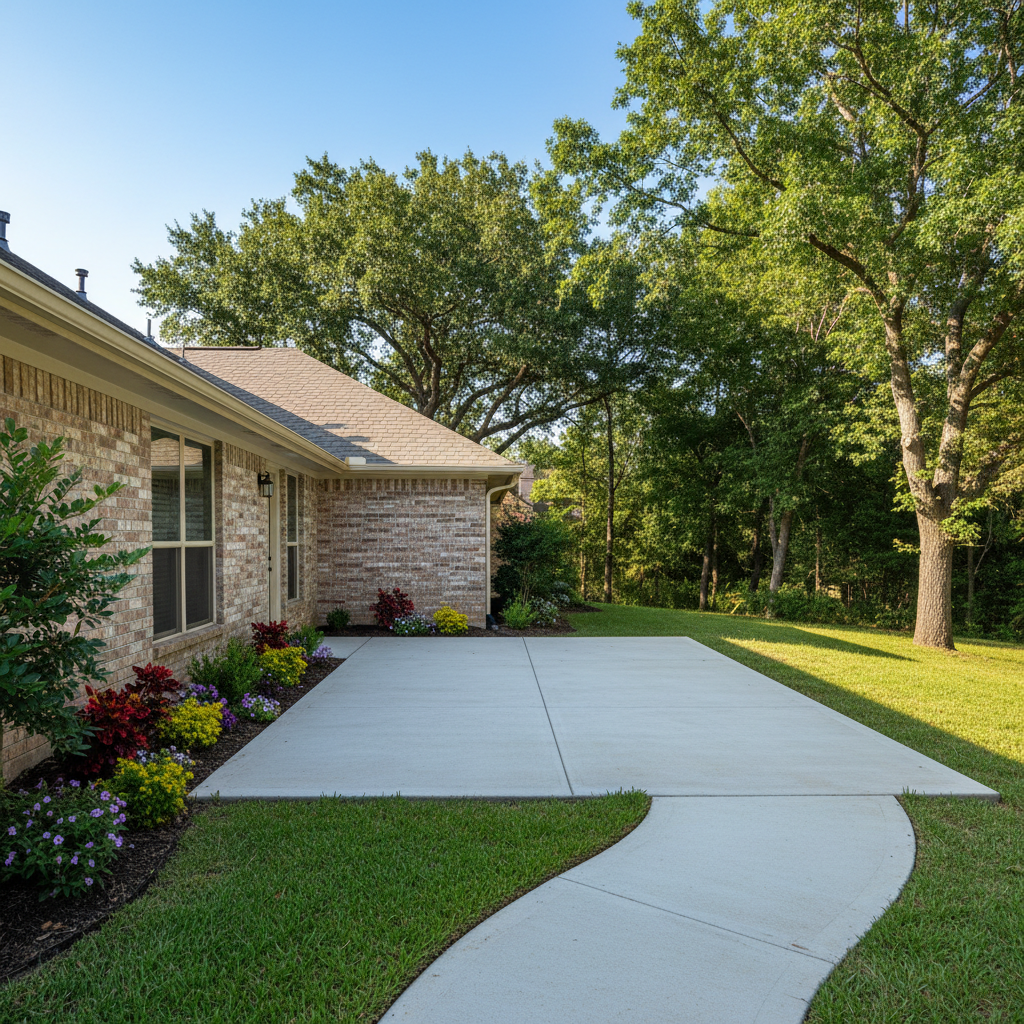
You want your new patio, driveway, or sidewalk to last, right? Of course you do. And here in Carrollton, our weather can be a real challenge for concrete. It's not just about getting the job done; it's about getting it done right, so it holds up to our scorching summers and those occasional, surprising freezes. I've seen too many folks rush into a concrete project at the wrong time, only to have issues down the road. Let's talk about what our local climate means for your concrete flatwork.
When's the Best Time to Pour Concrete in Carrollton?
Honestly, the sweet spot for pouring concrete around here is usually spring or fall. Think mild temperatures, not too humid, and generally stable weather patterns. That's when the concrete can cure properly without being stressed by extreme heat or cold.
- Spring (March-May): This is often ideal. Temperatures are usually in that perfect 50-70 degree range during the day, and nighttime lows aren't dipping too much. The ground isn't frozen, and we're typically past the worst of the winter rains. The concrete has time to set and gain strength gradually.
- Fall (September-November): Another great window. After the brutal summer heat breaks, you get those comfortable days again. Just keep an eye on those first cold snaps; you don't want temperatures dropping below freezing too soon after a pour.
Now, can you pour in summer or winter? Yes, but it comes with more challenges and often requires special precautions, which can sometimes add to the cost or complexity. It's not always impossible, but it's definitely not ideal for long-term durability without extra care.
How Weather Conditions Affect Your Concrete Project
The weather isn't just about temperature; it's about a whole lot more when you're dealing with concrete.
The Summer Scorch
Our Carrollton summers are brutal. We're talking 90s, 100s, sometimes even hotter. This kind of heat makes water evaporate from the concrete mix way too fast. When that happens, the concrete can dry out before it's had a chance to properly hydrate and gain strength. You end up with a weaker slab, and it's much more prone to cracking, especially surface cracks, which we call plastic shrinkage cracks. We can use admixtures or special curing compounds, and we'll often pour very early in the morning, but it's a battle against the sun.
The Winter Chill
While we don't get prolonged deep freezes like up north, those sudden cold snaps can be a problem. If the temperature drops below freezing (32°F or 0°C) too soon after concrete is poured, the water inside the mix can freeze. When water freezes, it expands. This expansion can damage the concrete's internal structure, leading to significant strength loss and flaking or scaling on the surface. We can use accelerators or blankets to protect it, but it's always a risk.
Rain, Rain, Go Away
A little drizzle during a pour isn't usually a deal-breaker, but heavy rain can be. Too much water added to the surface of fresh concrete can weaken it, wash away the cement paste, and make the surface soft and chalky. It's also just plain difficult to finish properly. We're always watching the forecast like a hawk before we start a job.
Wind and Humidity
Believe it or not, wind can also cause issues by speeding up surface evaporation, similar to heat. Low humidity does the same thing. It's all about making sure that concrete cures slowly and steadily, giving it time to develop its full strength.
Protecting Your Concrete Investment Year-Round
Once your concrete is in, you want it to last. Here's what you can do:
- Proper Curing is Key: This is on us during installation, but it's the most critical step. We use curing compounds, wet burlap, or plastic sheeting to keep the moisture in the concrete for several days after it's poured. This allows it to reach its maximum strength and durability.
- Seal It Up: About a month after installation, I highly recommend applying a good quality concrete sealer. This acts like a shield, protecting your concrete from water penetration, oil stains, UV damage, and even de-icing salts if you ever use them. You'll want to reapply it every 2-5 years, depending on the sealer type and traffic. This is especially important for driveways in neighborhoods like Timberbrook, where you've got cars dripping oil or other fluids.
- Clean Regularly: Sweep off debris, leaves, and dirt. If you get spills like oil or grease, clean them up quickly before they can penetrate. A good pressure washing every now and then can keep it looking fresh.
- Avoid De-Icing Salts: If we get ice, try to avoid using rock salt (sodium chloride) on your concrete, especially if it's less than a year old. These salts can cause surface damage and accelerate deterioration. Sand is a much safer alternative for traction.
- Watch for Cracks: Minor hairline cracks are pretty normal; concrete expands and contracts with temperature changes. But if you see larger, widening cracks, or significant sinking, give us a call at Carrollton Concrete. It's better to address issues early.
Taking a little extra care and planning around our Texas weather can make a huge difference in how long your concrete flatwork looks good and performs for you. Don't hesitate to ask us if you have questions about your specific project!